

How to Get NDIS Funding for AAC: A Step-by-Step Guide
Table of Contents
- Understanding NDIS Funding for AAC
- Check Your NDIS Eligibility and Plan Status
- NDIS Assistive Technology Assessment Requirements
- The AAC Device Trial Process NDIS Expects
- Working with a Speech Pathologist AAC Report Template
- Submitting Your NDIS Funding Request and What Happens Next
- Low-Tech AAC Options and NDIS Coverage
- Frequently Asked Questions
Last Updated: October 4, 2026
Understanding NDIS Funding for AAC
How to get NDIS funding for AAC is one of the most common questions we hear from parents and carers. Augmentative and Alternative Communication (AAC) devices and tools can transform how non-verbal individuals communicate, but they're often expensive. The good news: the National Disability Insurance Scheme (NDIS) can cover many of these costs if you know how to navigate the process.
At Talk-Tee, we work with families every day who are accessing NDIS support for communication tools. The pathway to funding isn't complicated, but it does require planning and the right documentation. This guide walks you through each step so you can get the communication support your loved one needs without the confusion.
AAC refers to any method of communication that supplements or replaces spoken speech. This includes everything from high-tech devices like tablets with speech software to low-tech solutions such as communication boards and wearable tools. The NDIS recognises both types as legitimate assistive technology when they're recommended by qualified professionals.
The NDIS will fund AAC if it's included in your participant's plan and meets their identified needs. Your job is to demonstrate that need clearly. We'll show you exactly how.
Check Your NDIS Eligibility and Plan Status
Before pursuing AAC funding, confirm two things: you have an active NDIS plan, and communication support falls within your plan's scope.
First, check whether your plan already mentions communication or assistive technology. Log into your NDIS portal or contact your Local Area Coordinator. They can tell you what funding categories apply to you. Common categories that cover AAC include:
- Assistive technology
- Communication supports
- Therapy supports
If your plan doesn't currently include communication funding, you can request a plan review. This happens automatically every 12 months, or you can ask for one sooner if your circumstances have changed.
Your plan needs to show that communication is a priority for you. This is where professional recommendations become crucial. A speech pathologist's report linking AAC to your participant's goals carries real weight with NDIS planners.
NDIS eligibility and planning information
NDIS Assistive Technology Assessment Requirements
The NDIS doesn't fund assistive technology on a whim. They need evidence that the tool addresses a real need and matches your participant's abilities.
A formal assistive technology assessment typically includes:
- Evaluation of the participant's current communication method
- Assessment of fine motor skills and cognitive ability
- Trial of different AAC options
- Recommendations tailored to the individual
You'll need a qualified professional to conduct this assessment. Speech pathologists are the standard choice, though occupational therapists can also perform assessments in some cases. The assessment should clearly state which AAC tools are suitable and why.
The NDIS expects the assessment to answer specific questions:
- What communication barriers does the participant face?
- How will AAC reduce those barriers?
- What specific device or tool is recommended?
- Can the participant physically and cognitively use it?
Without this assessment, your funding request will likely be rejected. It's not bureaucracy for its own sake. The assessment protects both you and the NDIS by ensuring the tool actually fits the person using it.
The AAC Device Trial Process NDIS Expects
The NDIS strongly prefers that participants trial AAC options before committing to funding. This makes sense: you wouldn't buy a car without test-driving it. The same logic applies here.
A proper AAC device trial process typically runs 2-4 weeks. During this time, the participant uses the device in real settings: at home, at school, with therapists. The goal is to gather evidence about whether it works for them.
What should happen during a trial:
- The participant uses the device regularly in everyday situations
- You document how they interact with it
- Note any barriers or successes
- Gather feedback from everyone involved (parent, teacher, therapist, the participant)
After the trial, your speech pathologist writes up the results. This report becomes part of your NDIS funding request. It shows the NDIS that you've done the groundwork and the tool actually delivers results for your person.

Working with a Speech Pathologist AAC Report Template
Your speech pathologist's report is the foundation of your NDIS funding request. This report needs to be thorough, specific, and directly tied to your participant's NDIS goals.
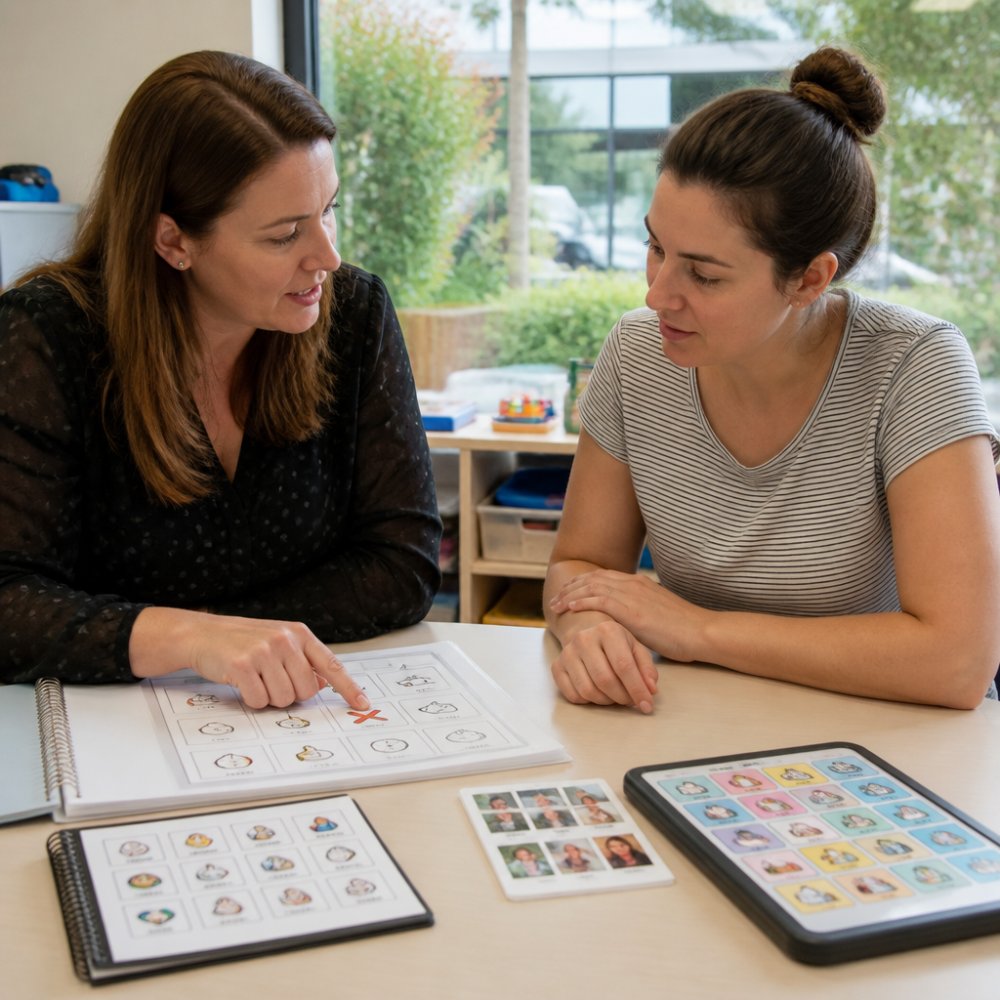
A strong AAC report from your speech pathologist includes:
Participant background and communication history
- Current communication methods and limitations
- How long the communication difficulty has existed
- What's been tried before
Assessment findings
- Specific results from the assistive technology assessment
- Details about motor skills, cognitive ability, and communication level
- Any sensory considerations
AAC recommendation
- The specific device or tool recommended
- Why this option suits this person
- How it addresses their identified needs
Trial results (if applicable)
- What happened during the trial period
- How the participant responded
- Evidence of success or areas needing adjustment
Link to NDIS goals
- How AAC supports the participant's goals in their NDIS plan
- Specific outcomes expected from using the tool
Ask your speech pathologist to structure the report around your NDIS plan goals. When the NDIS planner reads it, they should see a clear line from "this is what the participant needs" to "this is how AAC addresses that need" to "this is what we expect to achieve."
NDIS assistive technology and communication support guidelines
Submitting Your NDIS Funding Request and What Happens Next
Once you have the assessment report and trial results, you're ready to submit your funding request. This happens through your NDIS plan review or a formal request to your Local Area Coordinator.
What to include in your submission:
- The speech pathologist's assessment and recommendation report
- Trial results and feedback from the trial period
- Evidence of how AAC addresses your NDIS plan goals
- Quotes or pricing for the specific device recommended
- Any additional supporting documents (school reports, therapist notes)
Submit everything together. Don't drip-feed documents. The NDIS planner reviews the whole package to make a decision.
The NDIS typically responds within 2-4 weeks. They may:
- Approve the funding as requested
- Approve partial funding (covering part of the cost)
- Request more information before deciding
- Decline the request
If they decline, you can request a review of that decision. This is where having solid professional documentation makes a difference.
Once approved, the funding sits in your plan until you're ready to purchase. You then buy the device and submit the invoice to the NDIS for reimbursement, or arrange direct payment through your plan.
Low-Tech AAC Options and NDIS Coverage
High-tech AAC devices are expensive. The NDIS does fund these when appropriate, but approval can take time and requires extensive documentation.
Low-tech AAC options offer a faster, more affordable path. These include communication boards, visual supports, and wearable communication tools. Many low-tech solutions qualify for NDIS funding and require less formal assessment.
Low-tech AAC tools that often receive NDIS approval:
- Printed communication boards and books
- Visual timetables and schedules
- Wearable communication clothing with symbols
- Picture exchange systems
- QR code safety identification tools
Talk-Tee specialises in low-tech wearable AAC solutions. The Seatbelt Chat-Wrap attaches to a seatbelt or harness and displays customised AAC symbols chosen by you. It includes a Scan2Connect QR code that links to medical information and emergency contacts. This tool gives non-verbal individuals a voice in the car, everywhere they go.

The I Wander Scan2Connect QR Safety Tee serves a dual purpose: it communicates that the wearer may need assistance and provides instant access to emergency information. For participants at risk of wandering, this addresses both communication and safety needs.

Low-tech solutions often trial more quickly and cost less upfront, making them easier to get approved through the NDIS. They're also portable, require no charging, and work in any environment.
Getting NDIS funding for AAC requires planning, professional documentation, and the right tool for your person. Start with a conversation with your Local Area Coordinator about whether communication support fits your plan. Then connect with a speech pathologist who understands NDIS requirements. With a solid assessment, a successful trial, and clear documentation of how AAC addresses your goals, you'll have a strong case for approval.
At Talk-Tee, we've helped families navigate this process with low-tech communication solutions that work in real life. When you're ready to explore options that give your loved one a voice, shop Talk-Tee's communication clothing and discover how simple, effective AAC can be.
Frequently Asked Questions
What evidence is required for NDIS AAC funding approval?
The NDIS requires a formal assessment from a qualified speech pathologist or occupational therapist demonstrating that AAC is necessary for your communication needs. Your report must show how NDIS funding for AAC will improve your ability to participate in everyday activities. Include details of any trials you've completed, your current communication challenges, and how specific AAC tools address those barriers. Medical records, school reports, and therapy notes strengthen your application.
How long does the NDIS funding approval process for AAC typically take?
The timeline varies, but expect 4–8 weeks from submission to decision. This includes time for the NDIS to review your assessment report, request any additional information, and process your request. Having all required documentation ready (assessment reports, trial evidence, medical history) speeds up the process. Some requests may take longer if the NDIS needs clarification or additional evidence about your AAC needs.
Can I trial an AAC device before requesting NDIS funding?
Yes, and it's strongly recommended. The AAC device trial process NDIS expects helps you and your assessor determine which tool works best for your communication style. Many speech pathologists offer short-term trials, and some providers loan devices. Document your trial experience thoroughly—note what worked, what didn't, and how it affected your communication. This evidence makes your NDIS funding request much stronger and demonstrates genuine need rather than assumption.
Does the NDIS cover low-tech AAC like communication boards and clothing with AAC symbols?
Yes, the NDIS can fund low-tech AAC tools if they're deemed necessary supports in your plan. Low-tech options like communication boards, AAC clothing, and visual supports are often approved because they're cost-effective and portable. However, approval depends on your individual plan and how well your assessment demonstrates that these tools address your communication barriers. Your speech pathologist's report must clearly explain why low-tech AAC is appropriate for your needs.