

Wearing Communication Aids for Social Anxiety
Table of Contents
- What Wearing Communication Aids for Social Anxiety Actually Means
- Low-Tech AAC Solutions for Anxiety: Why Simple Tools Work Better
- The Benefits of Wearable AAC Clothing for Daily Confidence
- How to Choose the Right Communication Aid for Your Needs
- Social Anxiety Communication Scripts: What to Put on the Aid
- Integrating Communication Aids into Real Social Situations
- Common Mistakes When Introducing Communication Aids
- Frequently Asked Questions
Last Updated: September 28, 2026
What Wearing Communication Aids for Social Anxiety Actually Means
Wearing communication aids for social anxiety means using a physical, wearable tool to help you express needs, feelings, or information when speech feels hard. At Talk-Tee, we offer solutions like shirts with symbols or QR codes that speak for you.
It is not about replacing speech. It is about lowering the pressure.
Communication aids are tools that support someone who finds talking difficult. For social anxiety, the goal is simple: give the person a way to communicate without needing to find words in the moment.
Here is the key difference. A tablet app needs charging, unlocking, and navigating. A wearable aid is just there. No setup, no screen, no delay.
- No battery to check
- No app to open
- No words to find under pressure
- Works in seconds, every time
That last point matters most. When anxiety spikes, thinking gets harder. A tool that demands nothing from you is a tool you will actually use.
How Low-Tech AAC Tools Differ from Apps and Devices
Low-tech AAC means communication tools that do not need power, software, or a screen. Think symbol shirts, lanyard cards, or printed boards.
High-tech AAC, by contrast, means speech-generating apps and dedicated devices. These can be brilliant for some people. But they come with friction.
Feature |
Low-Tech AAC |
Apps and Devices |
|---|---|---|
Power needed |
None |
Battery or charging |
Setup time |
None |
Unlock, open, navigate |
Durability |
Machine washable |
Breakable, water-sensitive |
Cost |
Usually lower |
Often higher |
Best for |
Quick, everyday use |
Complex vocabulary needs |
The trade-off is real. Apps hold more words. Low-tech tools are faster to use and harder to lose.
For many people with social anxiety, speed beats vocabulary size. A quick, clear signal ends the moment faster than a slow, detailed one.
Low-Tech AAC Solutions for Anxiety: Why Simple Tools Work Better
Simple tools work better for anxiety because they remove decisions. Every extra step is a chance to freeze.
Low-tech AAC solutions for anxiety are built on that idea. Fewer choices, faster access, less pressure.
Here is what most guides miss: the barrier is rarely the tool itself. It is the moment of use. Anxiety makes people avoid anything that feels like a performance.
A wearable aid skips the performance. You point, tap, or show. Done.
- No attention draw. You do not have to pull out a device.
- No verbal demand. You do not have to speak to be understood.
- No memory load. The information is already there.
- No failure risk. The tool does the work, not you.
That last benefit is underrated. When a tool carries the message, the person is not on the hook for getting it right.
This is why low-tech tools often win in real situations. They lower the stakes enough that the person actually uses them.
The Benefits of Wearable AAC Clothing for Daily Confidence
Wearable AAC clothing turns communication support into something you simply put on. No bag, no pocket, no remembering.
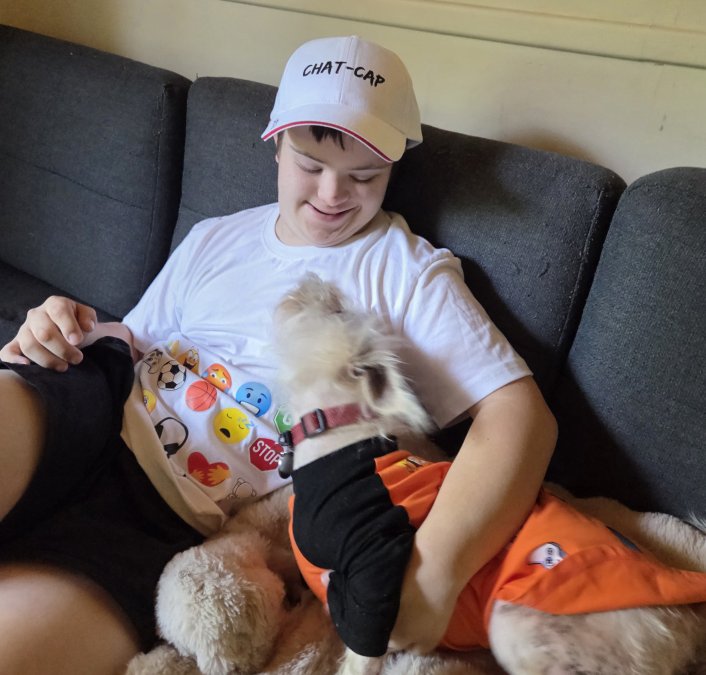
Young person using wearable communication aids on their t-shirt while smiling at their dog at home
The benefits of wearable AAC clothing show up in small moments. A child points to a symbol instead of crying. An adult shows a card instead of explaining. Each win builds confidence.
Confidence grows from repetition. Every successful exchange tells the person: I can do this.
There is also a social benefit. A shirt with symbols invites questions rather than stares. It starts conversations instead of shutting them down.
And it removes the "where is my aid?" problem. Clothing is worn, not carried. That means it is available at school, at the shops, and at home.
Safety Features That Go Beyond Communication
Some wearable aids do more than help someone speak. They help keep them safe.
Emergency QR technology is one example. A small QR code on the clothing can be scanned by a first responder or a member of the public. It can share key details fast.
Talk-Tee builds this into its Scan2Connect range. The idea is simple: if someone cannot explain who they are or what they need, the code can.
This matters most for people who may wander or become disoriented. In an emergency, seconds count. A wearable code means help does not have to wait for words.
- Works without speech
- Works without a phone on the person
- Works even when the wearer is distressed
For families, that is peace of mind you can put on in the morning.
How to Choose the Right Communication Aid for Your Needs
Choosing the right aid comes down to three things: how the person communicates now, where they need help most, and what they will actually wear or carry.
Start with the person, not the product.
Work through these questions:
- Does the person speak at all? If yes, the aid may only be needed in high-stress moments.
- What triggers the hardest moments? Shops, school, crowds, or new people.
- Will they wear it? Comfort and look matter more than most people expect.
- Is safety a concern? If wandering is a risk, prioritise a tool with emergency ID.
- Who else needs to understand it? Teachers, carers, and strangers all read it differently.
Then match the tool to the answer. A symbol shirt suits everyday use. A lanyard card suits quick outings. A QR safety feature suits anyone at risk of getting lost or hurt.
Social Anxiety Communication Scripts: What to Put on the Aid
Social anxiety communication scripts are short, ready-made phrases the person can point to or show. They remove the need to find words in the moment.
The best scripts are short, clear, and specific. Vague messages do not help. Clear ones do.
Good scripts cover the moments that cause the most stress:
- To start: "I need a minute." / "Can you help me?"
- To explain: "I find talking hard sometimes." / "I use this to communicate."
- To exit: "I need to leave now." / "Please give me space."
- To get help: "I am lost." / "Call my Mum."
- To connect: "Hi, I'm [name]." / "Want to play?"
Keep the number small. Five to eight scripts is plenty. Too many options slow the person down.
Integrating Communication Aids into Real Social Situations
Integration works best when it starts small. Do not debut the aid at a birthday party with fifty people.
Start at home. Use it during calm, everyday moments. Let the person get used to it before it matters.
Then build up:
- Use it with one familiar person first
- Move to a small, quiet setting
- Try it during a short outing
- Add busier settings only when the person is ready
Tell the people around you how it works. A quick word to a teacher or carer makes a big difference. They can prompt gently instead of putting pressure on.
And watch for wins.
Common Mistakes When Introducing Communication Aids
The biggest mistake is treating the aid as a last resort. It should be a normal, everyday tool, not something pulled out in a crisis.
Other common errors:
- Waiting for a meltdown to introduce it. Stress is the worst time to learn something new.
- Choosing looks over function. If it is uncomfortable, it will not get worn.
- Adding too many options. More choices mean slower use.
- Skipping the people around you. If carers do not know how it works, they cannot support it.
- Giving up after one try. New tools take time to become habit.
Frequently Asked Questions
How do wearable communication aids help with social anxiety?
Wearable communication aids reduce the pressure of verbal interaction by giving the wearer a visible, ready-made way to express needs, feelings and choices. For someone with social anxiety, knowing they can point to a symbol instead of speaking removes the fear of stumbling or being misunderstood. This lowers the mental load before and during social situations, making it easier to stay engaged rather than withdrawing.
Are there discreet communication tools for adults with social anxiety?
Yes. Low-tech AAC solutions for anxiety include clothing with subtle symbol panels that look like everyday accessories. Many adults prefer aids that blend into normal clothing rather than drawing attention. The key is choosing something the wearer feels comfortable using in public, because a tool that stays in a bag helps no one. Discreet does not mean less effective.
What are the benefits of wearable AAC clothing compared to alert bands?
Wearable AAC clothing combines communication support with safety identification in one item. Unlike a small alert band, clothing with integrated symbols gives the wearer a full communication board directly on their body, always accessible. It also carries emergency contact or medical information through QR technology, which helps first responders and carers act quickly. One item covers both daily expression and emergency situations.
How do I choose the right communication aid for my social needs?
Start by identifying where communication breaks down most: ordering food, asking for help, or signalling distress. Then match the aid to that situation. Consider how the person prefers to communicate (pointing, scanning, exchanging cards), how portable the aid needs to be, and whether it will be worn comfortably for long periods. Involving the user in the choice increases the chance they will actually use it.
Social anxiety can make everyday moments feel impossible, but the right aid changes the maths. Talk-Tee builds wearable communication clothing with portable low-tech AAC tools, plus Scan2Connect emergency QR safety gear for peace of mind. Our designs give non-verbal individuals a voice on the go, without batteries, apps, or fuss. Get started with Talk-Tee and give your family a tool they will actually wear.