

NDIS Funding for Communication Clothing: A 2026 Guide
Table of Contents
- What Is Communication Clothing and How Does NDIS Funding Apply?
- NDIS Reasonable and Necessary Supports: Does Communication Clothing Qualify?
- NDIS Consumables and Clothing: What Budget Covers Communication Aids?
- Communication Aids and the NDIS: Eligibility Criteria Explained
- Evidence for NDIS Funding Requests: What You Need to Gather
- Step-by-Step: How to Request NDIS Funding for Communication Clothing
- Real Examples: Communication Clothing Products Funded by the NDIS
- Frequently Asked Questions
Last Updated: 11 October 2026
What Is Communication Clothing and How Does NDIS Funding Apply?
NDIS-funded communication clothing displays visual communication aids, such as AAC symbols, emergency contact information, or safety identifiers, directly on fabric, making them accessible during everyday interactions without additional devices or technology.
For NDIS participants, communication clothing sits at the intersection of two funding categories: assistive technology and adaptive apparel. The NDIS recognises that communication is a fundamental support need, and clothing that facilitates communication can be funded under "reasonable and necessary supports" when it directly addresses a participant's communication goals outlined in their plan.
Talk-Tee specialises in low-tech AAC clothing solutions with customisable icon grids and QR code safety tees. Unlike high-tech devices requiring charging or apps, these tools work instantly with no setup, benefiting individuals who struggle with complex technology.

Securing NDIS funding requires demonstrating that the item directly supports your communication goals and meets "reasonable and necessary" criteria through clear evidence of need, professional recommendations, and documented connection to your NDIS plan.
NDIS Reasonable and Necessary Supports: Does Communication Clothing Qualify?
The NDIS funds supports that are "reasonable and necessary" for a participant to achieve their goals and increase independence. Communication clothing qualifies under this framework when it demonstrably improves a participant's ability to express themselves, access their community, or enhance safety, all core NDIS outcomes.
Communication clothing meets the "reasonable" test because it addresses documented communication needs, provides a portable alternative to fixed devices, enables community participation, costs less than high-tech AAC devices, and requires minimal maintenance.
The "necessary" component requires evidence that the item is required to achieve your goals. Professional recommendations and functional assessments are critical, if your plan identifies communication as a priority and a speech therapist recommends communication clothing, approval is far more likely.
The NDIS distinguishes between everyday clothing and assistive technology. A standard t-shirt is not fundable; a communication tee with AAC symbols chosen to support your goals is. Frame the item as an assistive tool, not general apparel.
NDIS Consumables and Clothing: What Budget Covers Communication Aids?
Communication clothing typically falls under one of three NDIS budget categories, depending on your plan structure and the specific item.
Assistive Technology and Equipment is the primary funding line for communication clothing. When your plan includes an explicit allocation for assistive technology, communication clothing should draw from this line.
Consumables may cover communication clothing if the item requires regular replacement. If your plan includes a consumables budget and your speech therapist recommends periodic updates (for example, new icons as needs evolve), consumables funding may be appropriate.
Capacity Building or Support Coordination budgets do not typically cover communication clothing directly, though support coordinator time in preparing your request may be funded through this line.
Most communication clothing funding comes from assistive technology budgets. Clearly state that the item is an assistive technology tool, not general apparel, to ensure correct evaluation.
Communication Aids and the NDIS: Eligibility Criteria Explained
NDIS funding for communication aids is governed by clear eligibility criteria that strengthen your funding request.
First, the participant must have a documented communication support need. Your NDIS plan should identify communication as a priority goal. If not, request a plan review to add this goal before seeking funding.
Second, the specific aid must be recommended by a qualified professional. Speech pathologists, occupational therapists, or special educators must recommend the item as a clinically appropriate tool, not a consumer preference.
Third, the aid must be directly linked to your documented communication goals. Specific, measurable goals like "increase independent communication of basic needs in community settings" are more likely to secure funding than vague goals. Explicitly connect the clothing to these goals.
Fourth, you must demonstrate that the aid is necessary to achieve your goals. Functional assessments and evidence are critical. Show that communication clothing has proven effective or that professional assessment indicates it will be.
Finally, the cost must be reasonable. Communication clothing is generally affordable compared to high-tech AAC devices, supporting the "reasonable" test.
Evidence for NDIS Funding Requests: What You Need to Gather
Securing NDIS funding communication clothing requires building a compelling evidence file. The stronger your evidence, the more likely your funding request will be approved without delays or disputes.
Professional Recommendations and Reports
A formal recommendation from a qualified speech pathologist or occupational therapist is the single most important piece of evidence. This recommendation should:
- Identify the participant's specific communication challenges and goals
- Explain why communication clothing is an appropriate intervention
- Describe how the specific product (e.g., Talk-Tee communication tees) addresses the participant's needs
- Include any relevant assessment data or observations supporting the recommendation
Many speech therapists are familiar with low-tech AAC solutions and can provide detailed recommendations. If your current therapist is unfamiliar with communication clothing, you may need to educate them about the product or seek a second opinion from a therapist with AAC expertise. The NDIS values independent professional recommendations, so having multiple professionals support your request strengthens your case.
Functional Assessments and Communication Goals
Functional assessments document how communication challenges currently impact your daily life and participation. These assessments should address:
- Current communication methods and their effectiveness
- Situations where communication breaks down or causes frustration
- How improved communication would enhance participation in school, work, or community activities
- The participant's communication strengths and learning style
Your NDIS plan should include specific, measurable communication goals. Rather than "improve communication," stronger goals read like: "use visual AAC tools to request preferred items independently" or "communicate basic needs and preferences in community settings without adult interpretation." Communication clothing directly supports these functional goals because it makes visual communication tools available at all times.
Step-by-Step: How to Request NDIS Funding for Communication Clothing
Requesting NDIS funding for communication clothing follows a structured process. Understanding each step increases your chances of approval and reduces unnecessary delays.
I Wander Scan2Connect QR Safety Tee for Dementia & Autism →
Documenting Your Communication Needs
Begin by gathering comprehensive documentation of your communication support needs. This foundation supports every subsequent step in the funding request process.
Create a clear summary of your communication challenges, including:
- Current communication methods (verbal speech, gestures, AAC devices, behaviour)
- Situations where communication is most difficult
- How communication challenges impact daily activities and participation
- Specific examples of communication breakdowns or frustration
Collect any existing assessments from speech pathologists, occupational therapists, or educators. These professional reports provide credible evidence of your communication needs. If you do not have recent assessments, consider requesting one before submitting your funding request, a current professional assessment significantly strengthens your case.
Document how communication clothing would address your specific needs. For example: "Our child uses visual communication supports at school but cannot access them in the community. A communication tee would enable consistent communication across all settings." This direct link between your needs and the proposed solution is essential.
Submitting Your Funding Request
Once you have gathered your evidence, prepare your formal funding request. Most NDIS participants submit requests through their NDIS portal or via their support coordinator.
Your request should include:
- A clear statement of your communication goal and how it aligns with your NDIS plan
- A professional recommendation supporting communication clothing as an appropriate tool
- Specific evidence of your communication needs (assessments, observations, examples)
- Details of the proposed product, including cost and why this specific item meets your needs
- An explanation of how the item is assistive technology, not general apparel
Be specific about which Talk-Tee product you are requesting. For example: "Scan2Connect Safety Tee with customised AAC icons" is clearer than "communication clothing." Include the cost and explain that the first 12 months of the Scan2Connect QR code subscription are included with the purchase, reducing ongoing costs.

Submit your request well in advance of when you need the item. NDIS funding decisions typically take 2-4 weeks, and you may need to provide additional information or clarification during this period.
What to Do If Your Request Is Declined
If your funding request is declined, you have options. First, request written feedback explaining the decline. Common reasons include insufficient evidence of need, lack of professional recommendation, or unclear connection to your NDIS goals. Understanding the specific reason allows you to address it in a revised request.
If the decline was based on insufficient evidence, gather additional professional recommendations or functional assessments. If the connection to your goals was unclear, revise your request to more explicitly link communication clothing to your documented goals.
You can request a plan review to add or clarify communication as a goal in your plan. Once communication is explicitly included in your plan, funding requests for communication tools are substantially more likely to be approved.
If you believe the decline was incorrect, you have the right to request an explanation and, if necessary, escalate through the NDIS appeals process. Many declined requests are approved on appeal when additional evidence is provided or when the connection to NDIS goals is clarified.
Real Examples: Communication Clothing Products Funded by the NDIS
Understanding what types of communication clothing are actually funded by the NDIS helps you identify products that meet funding criteria and build your own request.
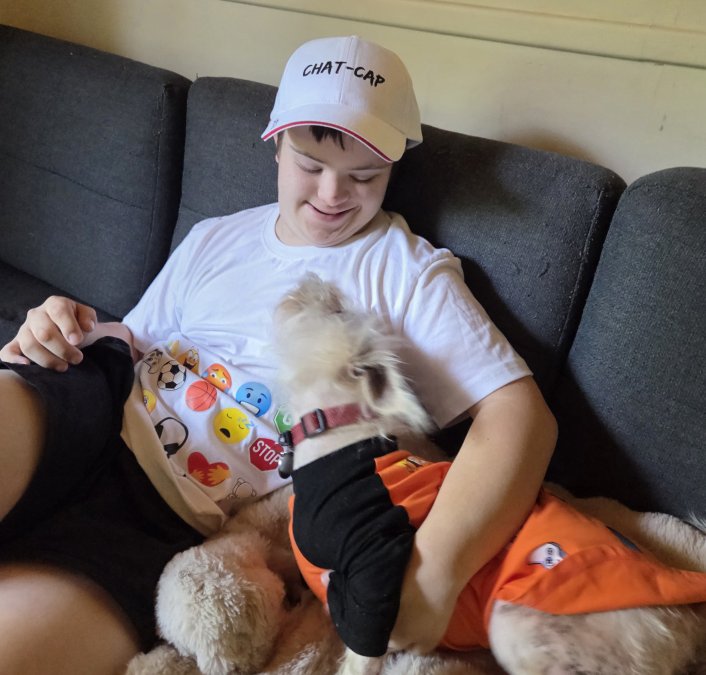
Communication tees with customisable AAC icon grids are among the most commonly funded communication clothing items.
Safety tees with QR code technology represent an emerging category of funded communication clothing. These tees display a QR code that, when scanned, provides emergency contact information, medical details, and communication guidance.
Seatbelt Chat-Wraps and harness-mounted communication aids are funded when they enable communication in high-risk or critical situations.

The common thread in funded communication clothing is clear professional recommendation, documented communication needs, and explicit connection to NDIS goals. When these elements are present, the NDIS recognises communication clothing as a reasonable and necessary assistive technology support.
Securing NDIS funding for communication clothing requires patience, clear documentation, and professional support, but it is achievable.
Frequently Asked Questions
Can NDIS funding pay for communication clothing?
Yes, NDIS funding can cover communication clothing when it meets the criteria for reasonable and necessary supports. Your plan must demonstrate that the clothing directly addresses communication or safety goals identified in your NDIS plan. Communication clothing such as AAC tees, wearable QR code patches, or safety wraps can be funded if they align with your participant's goals and are recommended by a qualified professional such as a speech therapist or occupational therapist.
What evidence should I provide when requesting NDIS funding for communication clothing?
Provide professional recommendations from a speech pathologist, occupational therapist, or other qualified professional that specifically link the communication clothing to your communication or safety goals. Include functional assessments showing how the clothing will improve participation, independence, or safety. Documentation of previous communication attempts and why this specific tool is necessary strengthens your case. A clear explanation of how the clothing addresses your identified goals is essential.
Can communication clothing be claimed from NDIS consumables funding?
Communication clothing can be funded through various NDIS budget categories depending on your plan structure. If your plan includes consumables funding, items like replacement patches or subscription-based QR code services may qualify. However, the initial communication clothing itself is typically funded under assistive technology or support-related categories rather than consumables. Your planner can clarify which budget line is most appropriate for your specific items.
What if the NDIS declines funding for communication clothing?
Request a detailed explanation of why your request was declined. Common reasons include insufficient evidence linking the clothing to your goals or lack of professional recommendation. You can request a review, provide additional evidence from a therapist or educator, or submit a revised request with stronger justification. Connecting the communication clothing directly to your NDIS goals and including specific examples of how it will improve communication or safety increases approval chances.
Do I need an occupational therapist's recommendation for communication clothing funding?
Whilst an occupational therapist's recommendation strengthens your application, other qualified professionals such as speech pathologists, special educators, or disability support coordinators can also provide the necessary evidence. What matters most is that a qualified professional demonstrates how the communication clothing directly supports your goals. If you don't have access to an occupational therapist, consulting with your speech therapist or requesting an assessment through your support network can provide the evidence needed.
How long does it take to get NDIS approval for communication clothing?
Processing times vary depending on your planner's workload and the complexity of your request. Typically, straightforward requests with strong professional evidence can be approved within 2-4 weeks. More complex requests may take longer. Submitting clear, well-documented evidence upfront—including professional recommendations and specific links to your goals—can speed up the approval process considerably.